
How to Connect AI to Existing Systems
Learn how to connect AI to existing systems with the right architecture, controls, and governance to deliver secure, measurable results.
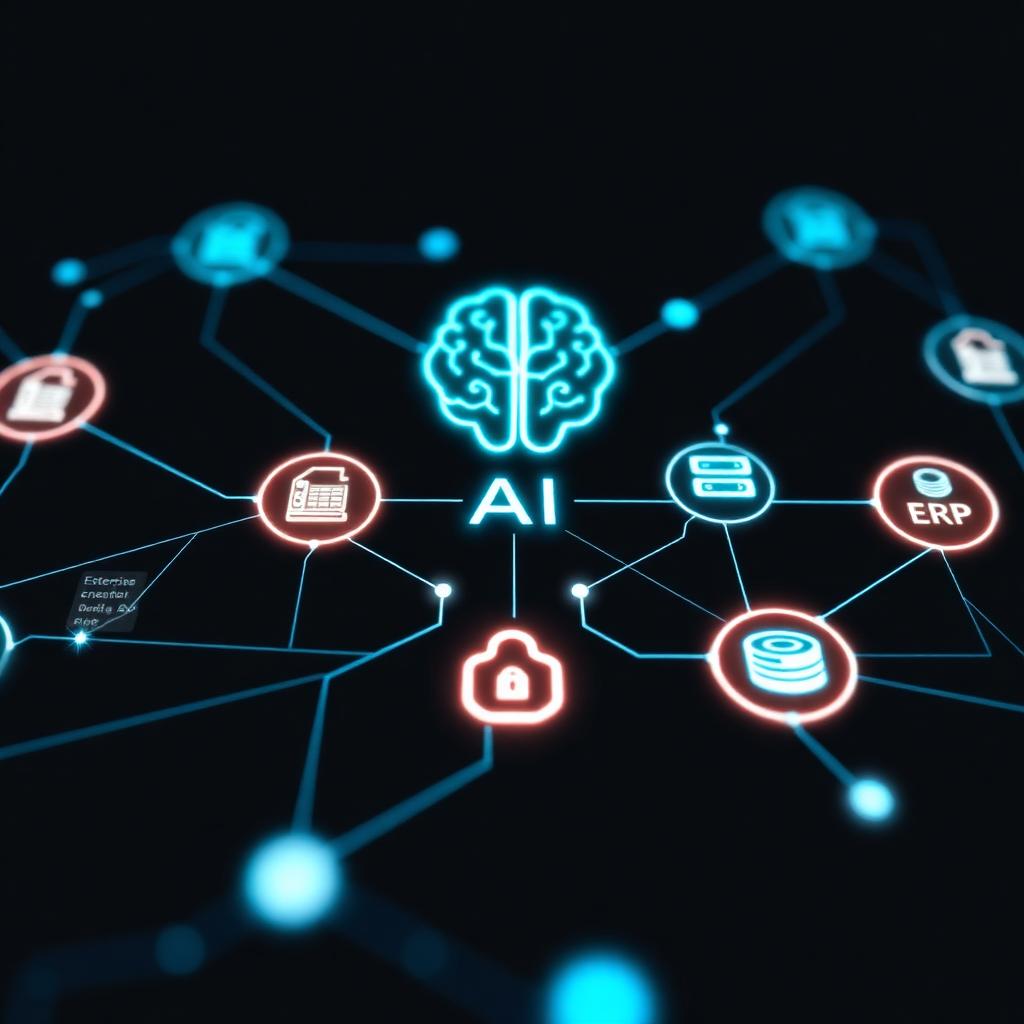
Most AI projects fail at the same point: the model can generate an answer, but it cannot do the work. It cannot read the right customer record, update the ERP, trigger an approval, or document what happened for audit. That is the real challenge behind how to connect AI to existing systems. The issue is not model quality alone. It is system access, process control, and governance inside the environments your business already runs.
If you are responsible for operations, architecture, or enterprise IT, this is where AI stops being a pilot and starts becoming infrastructure. Connecting AI to existing systems means giving it controlled access to SAP, Salesforce, Oracle, Microsoft environments, databases, APIs, internal tools, and workflow logic without creating a compliance gap or a black box. Done well, this produces real outcomes in weeks. Done poorly, it creates security risk, broken processes, and more manual cleanup than before.
What how to connect AI to existing systems really means
In enterprise environments, AI should not sit outside the core stack as a disconnected assistant. It needs to operate inside the process layer. That means it must be able to read context from business systems, reason over the task, take approved actions, and log every step.
For example, an AI agent handling order exceptions in manufacturing may need to pull data from SAP, check inventory in a warehouse system, compare contract terms from a CRM, and then open or update a service ticket. None of that is useful unless access is governed, actions are constrained, and every decision can be traced.
This is why connecting AI is not the same as adding a chatbot to a portal. A chatbot may answer questions. An integrated AI system executes process work. The architecture, controls, and operating model are fundamentally different.
Start with the process, not the model
The fastest way to waste budget is to start by picking a model and then looking for a problem. A better approach is to begin with a process that already has friction, volume, and measurable business impact.
Good candidates usually share a few traits. They involve repetitive decision-making, require access to multiple systems, and consume skilled staff time. Think accounts payable exceptions, claims handling, customer onboarding, procurement requests, logistics coordination, or service case triage.
Once the process is identified, define the execution path. What data does the AI need? Which systems must it read from? Which actions can it take automatically, and which require approval? What must be recorded for audit, compliance, or later review? These questions matter more than model benchmarks because they determine whether the solution can operate safely in production.
The architecture that works in production
A practical answer to how to connect AI to existing systems starts with an integration and control layer between the model and enterprise applications. Without that layer, organizations often end up with direct point-to-point connections, inconsistent permissions, and limited visibility into what the AI is actually doing.
The control layer should manage system connectivity, identity, authorization, policy enforcement, observability, and audit trails. It acts as the operating boundary between the AI agent and the rest of the business.
That architecture usually includes four parts. First, connectors to systems such as ERP, CRM, databases, APIs, document stores, and internal tools. Second, orchestration logic that structures tasks, calls tools in the right order, and handles failures. Third, governance controls that restrict what the AI can access and what it is allowed to do. Fourth, telemetry and logging so teams can inspect inputs, outputs, actions, timestamps, and exceptions.
This is where many enterprise teams shift from experimentation to production. The model is only one component. The integration and control framework is what makes the system operationally trustworthy.
Security and compliance cannot be retrofitted
A common mistake is to connect AI quickly and plan governance later. In regulated or process-heavy environments, that approach does not survive contact with procurement, security review, or internal audit.
If the AI touches sensitive business data, customer records, employee information, contracts, financial events, or operational workflows, security and compliance need to be built into the design from the start. That includes data residency, access control, encryption, role-based permissions, action limits, retention policies, and full traceability.
For many organizations, sovereign deployment also matters. On-premise or EU-hosted infrastructure can be a requirement, not a preference, especially when data handling obligations are strict. Model-agnostic architecture matters too. It gives the business flexibility to choose the right model for each use case without rebuilding the integration layer every time strategy or regulation changes.
The key principle is simple: if an AI agent can take action in a live process, there should be no black boxes. Every input, decision path, system call, and output should be inspectable.
Integration patterns that reduce risk
Not every use case needs the same level of autonomy. The right pattern depends on process criticality, system sensitivity, and the cost of errors.
In lower-risk scenarios, AI can act as a recommendation layer. It gathers data, proposes a next step, and waits for human approval before any transaction happens. This works well in finance approvals, contract review support, and customer service escalation.
In moderate-risk workflows, AI can perform bounded actions inside clearly defined rules. For instance, it may update a case status, create a draft response, classify incoming requests, or route a procurement ticket if confidence scores and policy checks pass.
In higher-volume, mature scenarios, AI can execute end-to-end tasks with exception handling. That only works when the workflow is tightly instrumented and rollback paths exist. If something fails, the process should fall back to a human queue rather than disappear into the stack.
The trade-off is straightforward. More autonomy can produce more value, but only if control and observability increase with it.
How to implement without creating another pilot
The implementation path should be narrow and outcome-driven. Pick one high-value workflow, map the systems involved, and define what success looks like in operational terms. That could be cycle time reduction, lower handling cost, faster case resolution, or fewer manual touches per transaction.
Then connect only the systems needed for that workflow. Avoid broad platform sprawl in phase one. The goal is not to integrate everything at once. The goal is to prove controlled execution inside one live process.
Next, establish permission boundaries. The AI agent should have the minimum access required, with explicit action scopes. If it needs to read order data but not modify pricing, enforce that at the integration layer rather than relying on prompts or user instructions.
After that, build the orchestration logic and exception paths. Define what happens when data is missing, a source system is unavailable, or a confidence threshold is not met. Production systems need predictable failure behavior as much as they need successful runs.
Finally, instrument the whole flow. Measure system calls, execution time, task completion rates, human intervention rates, and business outcomes. If you cannot see how the agent performed, you cannot improve it or defend it internally.
Where enterprises usually get stuck
The barriers are rarely about whether AI is promising. Most teams already know it is. The sticking points are operational.
One issue is fragmented connectivity. Data lives across ERP, CRM, file stores, ticketing tools, email systems, and custom applications. If each integration is built from scratch, delivery slows and governance becomes inconsistent.
Another issue is ownership. AI projects often start in innovation teams, while production systems are controlled by IT, security, and business operations. Without a shared operating model, pilots stall before deployment.
The third issue is trust. Leaders need evidence that the system will behave consistently, protect sensitive data, and stand up under audit. That trust does not come from demos. It comes from architecture, policy enforcement, and measurable performance in real workflows.
This is exactly why infrastructure matters. Platforms such as apichap are designed to provide the missing control layer between AI agents and enterprise systems so organizations can move from isolated experiments to governed execution.
What good looks like after go-live
A successful AI integration does not feel magical. It feels controlled, measurable, and useful. The process runs faster. Staff spend less time on repetitive handling. Exceptions are visible. Actions are logged. Security teams know where data moved and why.
The business result is not just better assistance. It is execution inside the systems that already run the company. That is where AI starts to generate real value.
If you are evaluating how to connect AI to existing systems, treat the model as one part of a larger operating environment. The winning design is the one that lets AI act inside real workflows with clear boundaries, full traceability, and measurable outcomes. That is how AI becomes part of the business, not another disconnected tool waiting for a use case.
The organizations getting results are not asking whether AI can sound intelligent. They are asking whether it can complete work safely inside the systems that matter most.
See sovereign AI in action
Talk to our team about putting governed AI agents into your enterprise workflows.
Book a demo