
SAP AI Integration That Works in Production
SAP AI integration delivers value when it connects to real workflows with governance, observability, and control for production use.
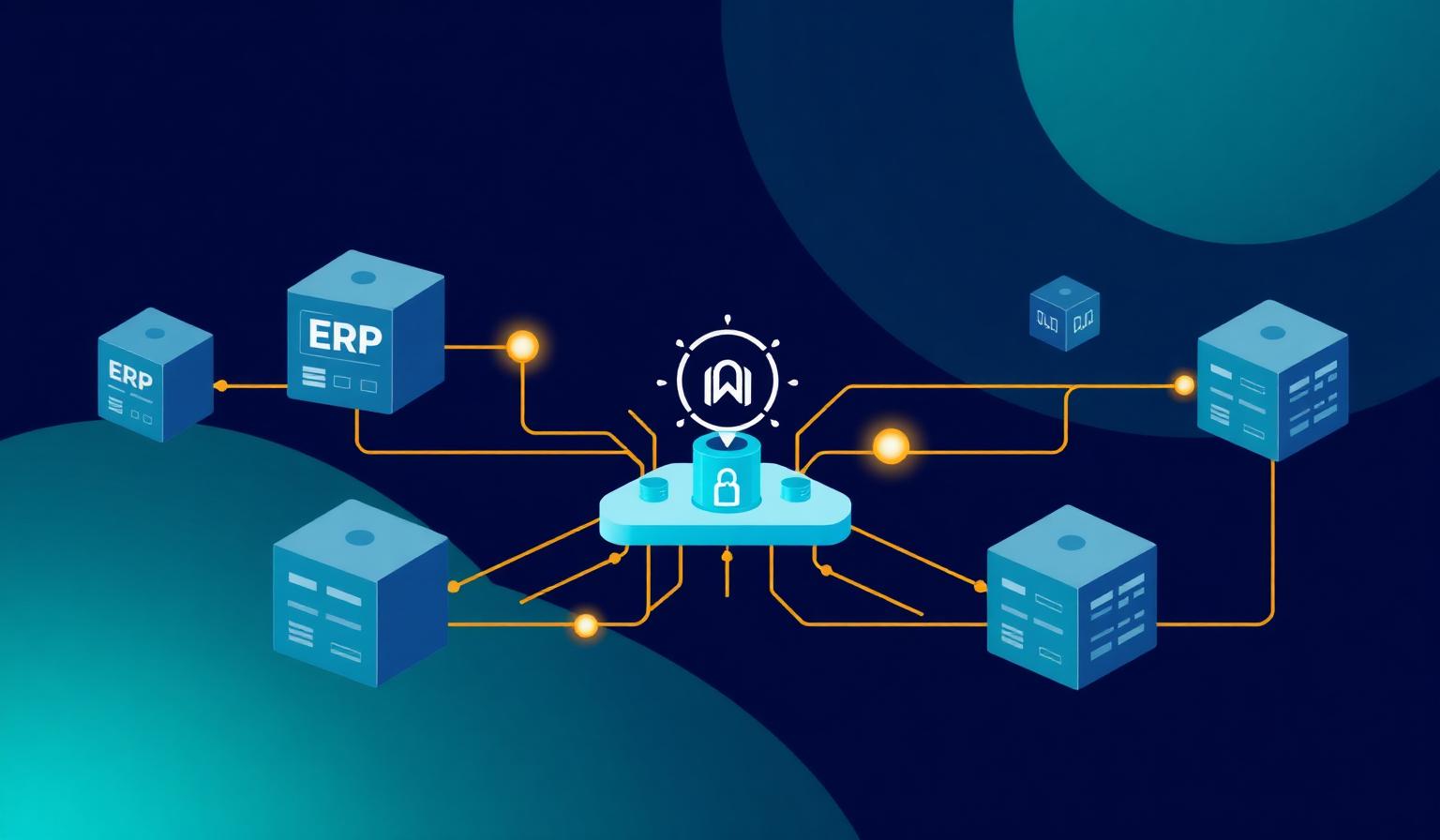
Most SAP AI projects do not fail because the model is weak. They fail because the model cannot act safely inside the systems that run the business. That is the real challenge with SAP AI integration: connecting AI to live enterprise processes without creating a governance gap, a security problem, or another pilot that never reaches production.
For companies running finance, supply chain, procurement, HR, or manufacturing processes in SAP, the bar is higher than "helpful answers." AI has to execute real work. It has to read the right context, trigger the right transaction, stay within policy, and leave a clear audit trail behind. If it cannot do that, it remains a side tool rather than an operational asset.
Why SAP AI integration is harder than it looks
On paper, the promise sounds simple. Add an AI layer to SAP, let users ask questions in natural language, and automate repetitive tasks. In practice, SAP environments are full of process logic, approvals, roles, master data rules, exception handling, and dependencies across other systems like CRM, ERP extensions, warehouse tools, ticketing platforms, and internal databases.
That complexity is exactly why generic AI interfaces fall short. A chatbot can summarize a purchase order policy or explain a finance report. It cannot be trusted to change supplier records, initiate a procurement workflow, or reconcile invoice exceptions unless the surrounding integration layer controls what it can access, what actions it can take, and how every step is monitored.
This is the dividing line between AI as a productivity accessory and AI as enterprise infrastructure. For regulated and process-heavy organizations, SAP AI integration is not mainly a model question. It is an architecture question.
What production-grade SAP AI integration requires
A workable architecture starts with system connectivity, but connectivity alone is not enough. Enterprises need an execution layer between AI agents and SAP that can translate business intent into controlled system actions.
That layer should manage authentication, permissions, input validation, process constraints, and logging. It should also make room for human approval where risk is high. If an AI agent is updating delivery status, creating service tickets, checking stock availability, or drafting vendor communications based on SAP data, each step needs defined boundaries. No black boxes. No hidden prompts making silent decisions against mission-critical systems.
Observability matters just as much as access. Leaders need to know what the agent did, why it did it, which systems were touched, what data was used, and where an exception occurred. If an invoice matching agent flags a discrepancy or posts a recommendation into a workflow, operations and compliance teams need traceability down to the transaction level.
Data handling is another point where many projects lose momentum. SAP data often includes financial records, employee information, customer data, and commercially sensitive operational details. Sending that context into uncontrolled third-party environments creates immediate concerns around GDPR, internal policy, and sector-specific compliance requirements. That is why deployment model matters. For many organizations, on-premise or EU-hosted execution is not a preference. It is a condition for adoption.
Where SAP AI integration creates real value
The strongest use cases are rarely the flashy ones. Real value comes from putting AI inside repeatable, high-volume operational flows where speed, consistency, and accuracy matter.
In procurement, AI can review incoming requests, classify them, pull policy context, check supplier and pricing data in SAP, and prepare the next workflow step for approval. In finance, it can investigate invoice exceptions, collect supporting records across systems, and present a recommended action with full traceability. In supply chain operations, it can monitor fulfillment or inventory signals and trigger coordinated updates across SAP and adjacent systems when conditions change.
Customer service is another area where SAP-connected AI becomes commercially meaningful. An agent can combine SAP order data with CRM history and internal service logic to generate actions, not just responses. It can open cases, update statuses, request missing information, and move the issue through a controlled process path.
The pattern is consistent: value appears when AI reduces cycle time inside an existing workflow, not when it sits outside the workflow generating text. That distinction matters for executive teams evaluating ROI. If the outcome is lower manual effort, faster exception handling, fewer handoff delays, and more consistent execution, then the business case is real and measurable.
Common mistakes in SAP AI integration
The first mistake is treating SAP as just another data source for a language model. SAP is not a content repository. It is a live transactional environment. Once AI moves from reading to acting, the controls have to change.
The second mistake is over-relying on a single model vendor or closed AI stack. Model quality matters, but enterprise architecture should remain model-agnostic. That gives teams flexibility to adapt performance, cost, sovereignty, and compliance requirements over time.
The third mistake is skipping process design. Not every workflow should be fully autonomous. Some require recommendations with human sign-off. Others can be fully automated if the inputs, outputs, and risks are tightly bounded. A strong SAP AI integration strategy starts by mapping which actions are safe to automate, which require review, and which should remain manual.
The fourth mistake is ignoring cross-system reality. Very few business processes live entirely inside SAP. A finance resolution flow may touch email, document repositories, CRM records, API services, and approval tools before a final SAP transaction occurs. If the AI layer cannot coordinate across those systems, the automation breaks at the exact point where value should appear.
A practical architecture for SAP AI integration
A production-ready setup usually has five layers, even if companies describe them differently.
The first is the system layer, where SAP connects alongside CRM platforms, databases, APIs, internal tools, and messaging systems. The second is the integration and control layer, which standardizes access and enforces permissions, policy, and monitoring. The third is the agent layer, where task-specific AI agents operate with defined scopes. The fourth is the governance layer, covering auditability, approval logic, observability, and compliance controls. The fifth is the business workflow layer, where teams define the outcomes that matter, such as invoice resolution time, procurement turnaround, or service response speed.
This architecture is less glamorous than a demo chatbot, but it is what gets AI into production. It also reflects how enterprise leaders should evaluate vendors. The question is not simply whether a provider can connect to SAP. The better question is whether they can support controlled execution across SAP-centered processes at production scale.
That is where infrastructure matters. Platforms such as apichap are built around this missing layer: secure connectivity between AI agents and operational systems, combined with governance, traceability, and sovereign deployment options. For companies that need measurable results in weeks rather than endless pilots, that architecture is often the difference between experimentation and execution.
How to assess SAP AI integration readiness
Executives do not need a moonshot roadmap to get started. They need a shortlist of operational criteria.
Start with one workflow where delay, manual effort, or exception volume is already visible. Then confirm that the underlying SAP process is stable enough to automate. If the workflow changes weekly or depends on undocumented workarounds, fix the process first.
Next, define the action boundary. Should the AI only retrieve context and recommend actions, or should it execute transactions directly? Both can work, but they carry different risk profiles and approval needs.
Then assess your control posture. Can you enforce role-based access, capture logs, monitor agent activity, and restrict where data is processed? If not, the project will stall under security and compliance review even if the use case is strong.
Finally, tie the initiative to a hard metric. Reduction in processing time, faster case closure, lower exception backlog, or improved first-pass accuracy are much stronger than broad claims about productivity. SAP AI integration gets budget when the outcome is operational, not aspirational.
What leaders should expect next
SAP AI integration is moving past the stage of isolated copilots and dashboard assistants. The next wave is process execution: agents that can coordinate work across SAP and neighboring systems while staying fully governed. That shift will reward organizations that invest in control layers early and punish those that bolt AI onto enterprise systems without enough discipline.
The real opportunity is not more AI access. It is more AI accountability. When agents can act inside business processes with full traceability, clear permissions, and deployment models that respect data sovereignty, companies stop asking whether AI is interesting and start measuring what it gets done.
If your SAP environment is central to how the business runs, that is the standard to aim for. Not another pilot. Real process work, under control.
See sovereign AI in action
Talk to our team about putting governed AI agents into your enterprise workflows.
Book a demo