
What an AI Integration Platform Should Do
An AI integration platform connects AI to core systems with control, auditability, and GDPR-ready governance for real enterprise execution.
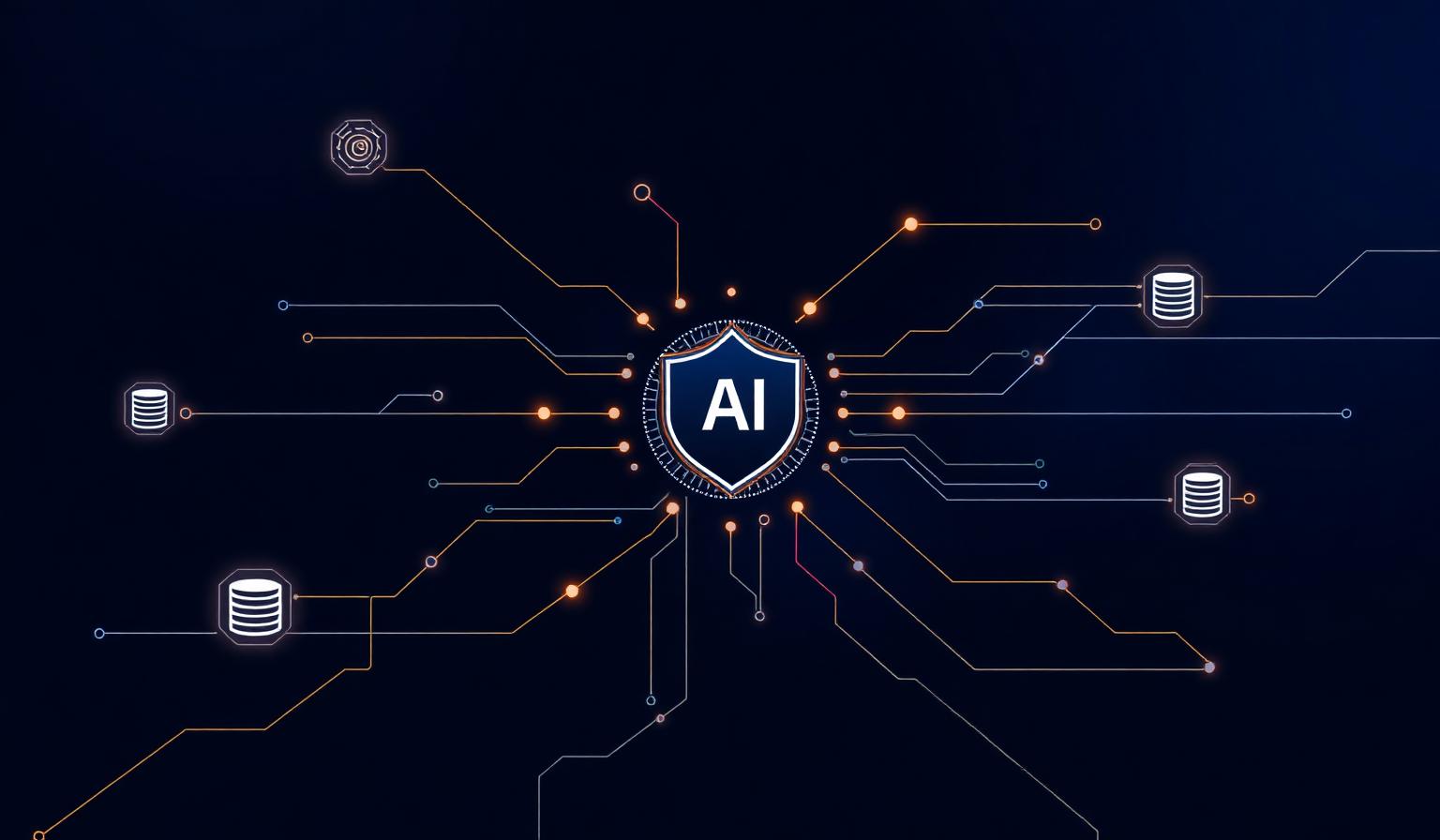
Most AI projects do not fail because the model is weak. They fail because the model cannot reliably reach the systems where work actually happens. An AI integration platform exists to solve that exact problem - giving AI controlled access to ERP, CRM, databases, APIs, and internal workflows without turning governance into an afterthought.
That distinction matters more than most teams expect. A chatbot can draft a response or summarize a document. But when a business wants AI to update SAP, trigger a purchase workflow, reconcile records across systems, or create a customer case in Salesforce, the conversation changes. Now the question is not whether the model sounds intelligent. The question is whether the enterprise can trust it to operate inside live processes with full traceability, policy enforcement, and measurable outcomes.
What an AI integration platform actually does
At a practical level, an AI integration platform sits between AI agents and the enterprise systems they need to use. It is the execution and control layer that allows agents to do real process work rather than remain isolated in a chat interface.
That means handling system connectivity across environments such as SAP, Oracle, Microsoft systems, custom APIs, document stores, data warehouses, and internal tools. It also means standardizing how AI interacts with those systems, so every action is governed, observable, and reviewable.
For an enterprise buyer, this is not just a technical convenience. It is the difference between a pilot and production. If AI cannot operate within permission boundaries, log its actions, and follow data handling rules, then it does not belong in a finance workflow, a logistics workflow, or any other mission-critical process.
A credible platform should make AI useful inside the systems of record the business already depends on. It should also reduce the amount of one-off integration work that slows down deployment and makes every new use case feel like a custom engineering project.
Why AI agents need an integration and control layer
Many organizations start with model access and only later realize they are missing the infrastructure around it. They have an LLM. They may even have a promising use case. But the agent still cannot execute work safely across core systems.
This is where a dedicated AI integration platform earns its value. It provides the governed pathways between models and business systems. It enforces who can do what, where data can move, and how actions are recorded. It gives operations, security, and compliance teams a way to trust the system because they can inspect it.
Without that layer, AI often creates new operational risk. Sensitive data may be sent to external services without enough control. Actions may be difficult to trace. Permissions may be overbroad. Error handling may be inconsistent. The result is familiar: interesting demos, delayed approvals, and no real deployment at scale.
With the right platform, those risks become manageable design constraints rather than blockers. The business can move faster because control is built into execution from the start.
The capabilities that separate real platforms from AI wrappers
Not every product marketed as an AI platform is built for enterprise execution. Some are prompt orchestration tools. Some are chatbot layers with a few connectors attached. Those can be useful for light knowledge work, but they are not enough when AI is expected to interact with regulated data and operational systems.
An enterprise-grade platform should be able to connect to the systems that matter most, including ERP, CRM, databases, APIs, file repositories, and custom internal services. It should be model-agnostic so organizations are not locked into a single provider or deployment pattern. It should support on-premise or controlled regional hosting when sovereignty requirements are strict.
Just as important, it should provide observability. Teams need visibility into which agent performed which action, against which system, using which input, under which policy. If something goes wrong, there should be no black boxes.
Auditability matters for the same reason. In regulated environments, being able to reconstruct an action trail is not optional. It is part of operational readiness. The platform should also support governance controls such as role-based access, approval flows, restricted tool access, and data handling rules aligned with GDPR and internal security policy.
This is the point many buyers underestimate: integration alone is not enough. Raw connectivity without control creates exposure. Control without execution creates bottlenecks. A real platform has to deliver both.
Where the business value shows up first
The strongest use cases are usually not the flashiest ones. They are the workflows where teams lose hours to repetitive cross-system work, slow handoffs, and manual verification.
In logistics, an AI agent might gather shipment data from multiple systems, identify exceptions, update records, and trigger the next operational step. In manufacturing, it might reconcile order information between ERP and production systems, flag inconsistencies, and prepare actions for human approval. In finance, it might validate invoice data, route exceptions, and maintain a complete audit trail of every step.
These are not theoretical benefits. When AI can execute within process boundaries, cycle times drop, manual work shrinks, and teams spend less time copying information across systems. That is where real value appears - not in novelty, but in throughput, accuracy, and control.
There is still a trade-off to manage. The more critical the workflow, the more governance the organization will expect. In some cases, full automation is appropriate. In others, a human-in-the-loop model is the better design. A good platform supports both, because enterprise adoption is rarely all or nothing.
What to evaluate before you choose an AI integration platform
The first question is not feature count. It is deployment fit. If your organization has sovereignty requirements, customer data restrictions, or sector-specific compliance obligations, the hosting model matters immediately. Public cloud convenience may be acceptable for some use cases and unacceptable for others.
The second question is system depth. A connector list looks impressive on a slide, but buyers need to know how deeply the platform can interact with real business systems. Can it read and write records? Can it trigger workflows? Can it work across complex permissions and approval models? Can it support custom APIs and legacy environments without months of integration effort?
The third question is control. Ask how policies are enforced, how actions are logged, how incidents are investigated, and how teams monitor live agent behavior. If the answer relies too heavily on trust in the model, the platform is not enterprise-ready.
The fourth question is speed to outcome. Many organizations do not need another long transformation program. They need measurable results in weeks. That means the platform should support rapid integration, reusable components, and production-ready patterns for common workflows.
This is where infrastructure-led providers stand apart. The goal is not to make AI look impressive in isolation. The goal is to make it operational inside the systems the business already runs.
Why sovereignty and traceability are becoming non-negotiable
As AI adoption moves closer to live operations, enterprise expectations are getting stricter. Buyers are asking where data is processed, who can inspect agent actions, and how to prove compliance after the fact. That is not caution for its own sake. It reflects the reality that once AI starts touching orders, contracts, payments, inventory, or customer records, the tolerance for ambiguity disappears.
Sovereign deployment options matter because not every business can send operational data through uncontrolled external environments. Traceability matters because every action must be attributable and reviewable. Model flexibility matters because providers, costs, and performance requirements change over time.
That combination is why the market is moving beyond simple AI apps and toward infrastructure. Platforms like apichap are built around this shift - not just connecting agents to systems, but enforcing the governance, auditability, and operational discipline required to make those agents useful in production.
An AI strategy becomes credible when it can survive contact with the real constraints of the enterprise. That means existing systems, compliance rules, operational risk, and executive pressure to show results.
The right AI integration platform does not promise magic. It gives your business a controlled way to put AI to work where work already happens, with fewer delays between pilot interest and measurable execution. If you are evaluating AI for core operations, that is the standard worth holding.
See sovereign AI in action
Talk to our team about putting governed AI agents into your enterprise workflows.
Book a demo